Author: curvytech

  • Stream Notes: 03/16/2026 If Firefly Returns, Serenity Needs Wash

    Stream Notes: 03/16/2026
    If Firefly Returns, Serenity Needs Wash

    “Curse your sudden but inevitable betrayal!”

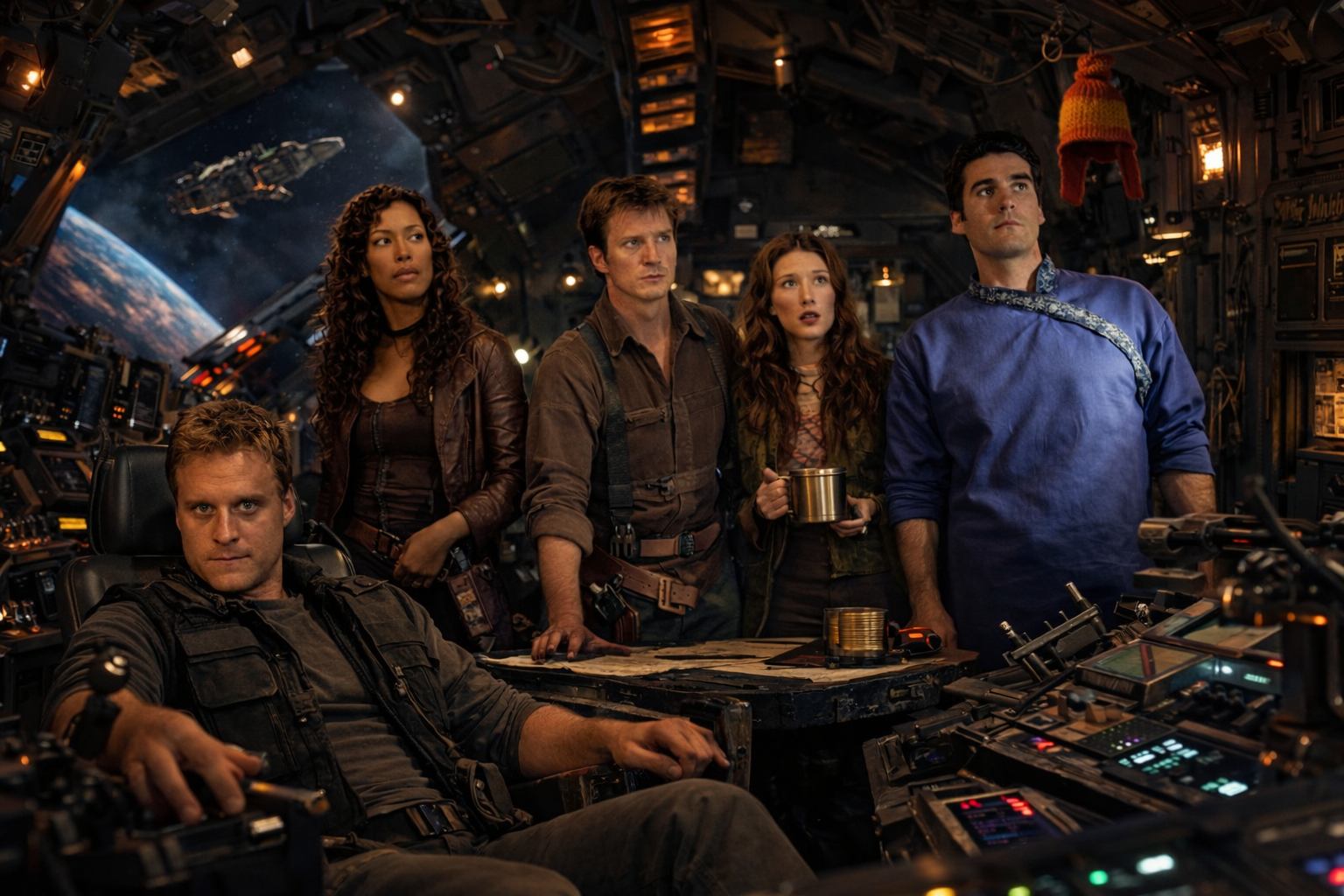
    Who would have thought such an absurd little exchange between two plastic dinosaurs, brought to life by the perfect comedic timing of Alan Tudyk, would become one of the defining moments of a show destined for cult classic status?

    When Firefly first aired in 2002, there were very few who could have predicted the impact it would make despite it having such a short run. The series lasted only 14 episodes before it was canceled by Fox, but in that brief time, it built something that most series, even today, spend years attempting to achieve: a deep and loyal fanbase.

    Part of that success came from the world created by the actors playing its beloved characters. Firefly blended that true grit of a frontier western with the expanse of science fiction, carried by a very flawed, very real, very human crew. Captain Malcolm “Mal” Reynolds and the crew of the Serenity weren’t traditional heroes. They were survivors navigating a universe that didn’t always play fair.

    But what made the show really special was the chemistry between its cast.

    Each member of the crew brought something unique to the ship, and Alan Tudyk’s portrayal of Hoban “Wash” Washburne quickly became one of the best-loved characters of the series. Wash was the pilot, comic relief, and often the heart of the crew’s dynamic. His sense of humor balanced the stress of life on the run, and his relationship with Zoe provided the show with some of its most grounded and real moments.

    Even years after the show ended, fans continue to quote his lines and revisit the scenes that made his character unforgettable.

    Firefly never really ended with its cancellation. Thanks largely to the dedication of its fans, the series found a second life through DVD releases, conventions (continued to this day), and eventually the 2005 film Serenity. The film provided fans a sense of closure, but it also reminded audiences how much potential Firefly still held.

    It’s two decades later, and conversations about a possible revival are beginning to circulate once again.

    Recent reports show Nathan Fillion has reached out to the original cast members, creating viral Instagram reels and knocking on their doors, telling them some variation of “It’s time.” The only one missing was Ron Book, who played Derrial Book due to his passing in 2016.

    While nothing official has been announced yet, the idea created with these Instagram reels has reignited excitement amongst the Browncoats (the Firefly fanbase), who have never stopped hoping that Serenity would one day fly again.

    If a series revival were to happen, it would almost certainly owe its existence to the very same community that kept it alive for the movie and keeps it alive still. Few series maintain this type of loyal base for so long, and Firefly remains a rare example of how powerful a dedicated fanbase can be.

    Of course, any discussion about revisiting the ‘verse inevitably raises one difficult question.

    What about Wash?

    His death in Serenity has remained one of the most shocking and emotional moments in the franchise, and it’s still difficult to imagine the crew without their pilot. If Serenity ever flies again, many fans would love nothing more than to see Alan Tudyk return to the cockpit.

    For everything that has come and gone in science fiction, there is still something uniquely special about the crew of the Serenity.

    And “you can’t take the sky from me.”

    Other Topics Covered This Live:

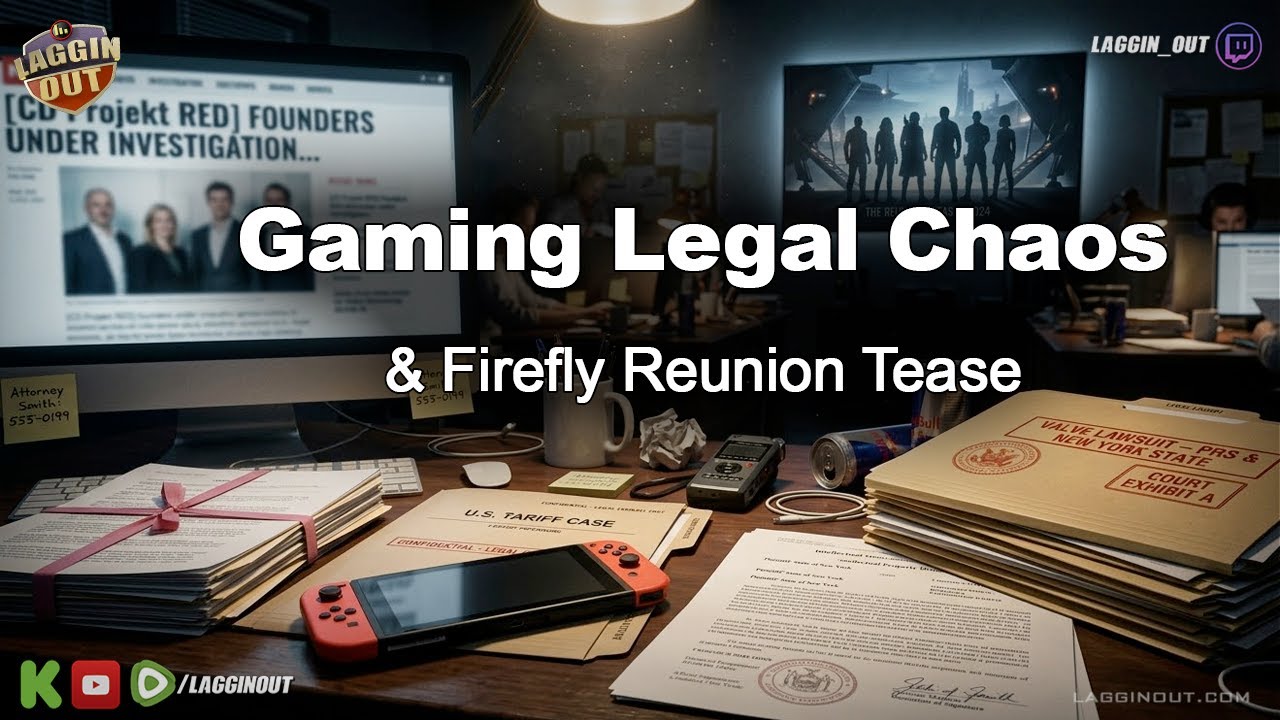
    • Nintendo Sues The U.S. Over Tariffs
    • CDPR Founders Named In Death Investigation
    • VALVE Sued by PRS AND New York State (case may be dismissed)
    YouTube player
  • Stream Notes: 03/09/2026 Microsoft’s Next AI Patch, Scorched Earth

    Stream Notes: 03/09/2026
    Microsoft’s Next AI Patch, Scorched Earth

    What may have seemed like a lifetime of Chieftain attempting to use critical thinking to retrieve the term “critical thinking”, Hiro was finally able to get to the crux of our shared ranting of Microslop (ban this Nadella).

    Fail Point #1

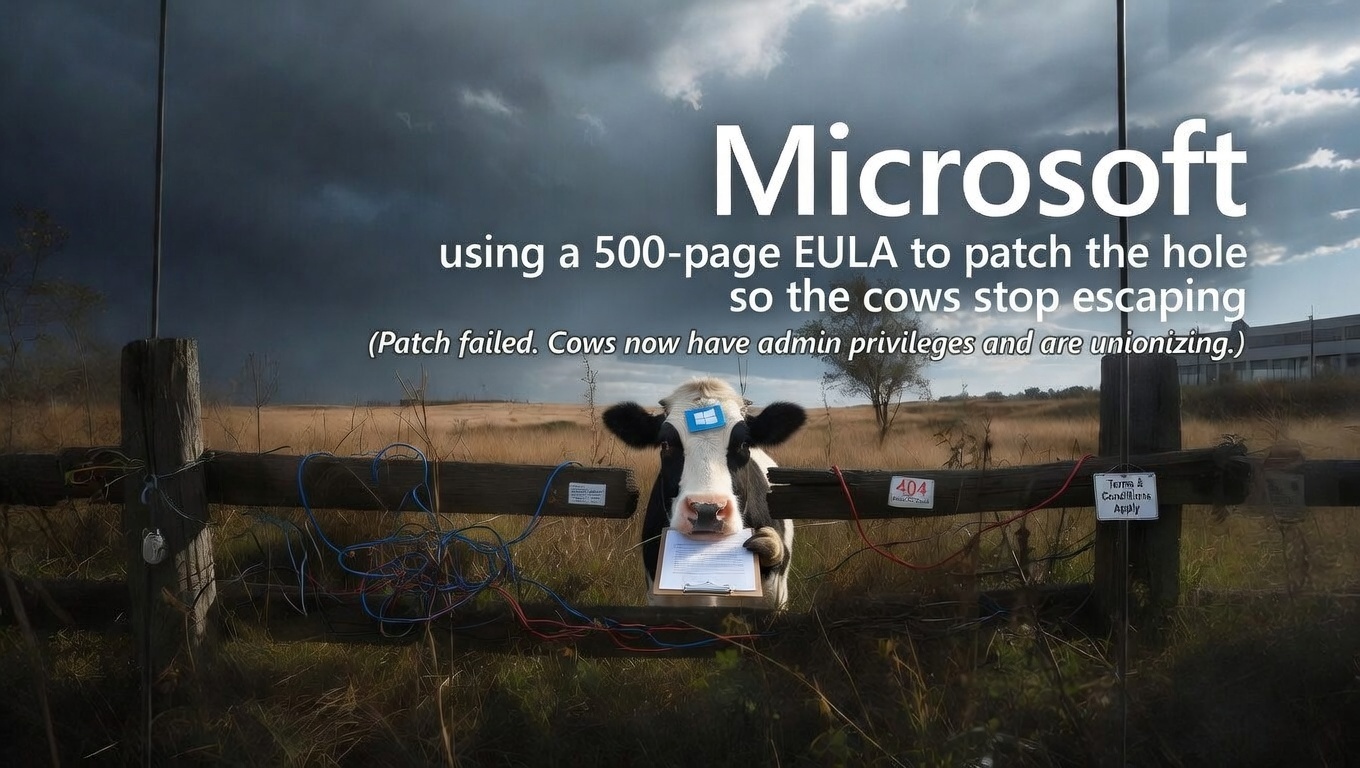
    A recent failed (shocker) update by the OS giant prevented users from shutting down, rebooting, or putting their systems to sleep. Naturally, let’s blame NVIDIA drivers. Sure, Jan.

    To top it all off, this lands right on the heels of Satya Nadella’s boasting that 30 percent of their update coding is now written with AI. Meanwhile, Copilot is being implemented into pretty much every dead Microsoft product imaginable, including MS Paint. The irony writes itself.

    Their latest update, yet again written with AI, apparently decided to wipe out all Network Connections. Because…reasons.

    Why not go for broke? Let’s push for an update that deletes the hosts file next. Live dangerously, Microsoft.

    Fail Point #2

    Windows 12: Copilot Edition, (CPU Optional).

    Enough said. I’m already over this topic.

    Fail Point #3

    Nothing says “we’re fighting coordinated harmful spam” like blocking the one word that is being used to describe the spam-like quality of your product itself.

    Microsoft swooped in to “protect the community” from the very criticism it generated into a viral meme in the first place. Genius level anti-spam strategy guys.

    If you can’t stop the people calling your products slop, just nuke the whole room so no one can speak at all.

    Mission accomplished so that now the only thing flooding the interwebs is how Microsoft tried to ban its own L.

    Fail Point #4 (Hiro’s Capstone)

    No, Hiro. I’m not bringing up the Russian hooker.

    This last point was touched on by Hiro, but I did some additional digging of my own.

    Microsoft has faced some accusations in recent years of discriminating against religious employees and nonprofits.

    In May 2025, Louis D Brandeis Center for Human Rights Under Law sent a warning letter to Microsoft, alleging the company violated Title VII of the Civil Rights Act of 1964 by refusing to recognize or allow “Jews at Microsoft” Employee Resource Group (ERG).

    Microsoft primarily classified Judaism as a religion and not an ethnicity/ancestral group, excluding Jewish employees from forming an ERG and denying them the equivalent opportunities.

    The Brandeis Center threatened to file a federal lawsuit or EEOC complaint describing this as rooted in antisemitism.

    By July 2025, Microsoft agreed to recognize “Jews at Microsoft” as an ERG under the ethnic identity category.

    In November 2025, Florida Attorney General James Uthmeier publicly accused Microsoft of “unlawful religious discrimination” and “anti-Christian discrimination”, claiming the company denied discounts to religiously-affiliated nonprofits, while applying its anti-discrimination policies inconsistently.

    Microsoft responded by fixing its policy stance and it seems to have been settled informally through dialogue and adjustments.

    Both of these cases seem to align where advocacy pressure led to quick reversals or clarifications.

    At this point Microsoft seems less and less like a software company and more like live beta testing for whatever Copilot hallucinated overnight.

    But, hey, at least Paint has AI now, clearly priorities are in order.

    Other Topics Covered This Live:

    • New Creators of Evangelion series after Creator Dies
    • Myrient Is Shutting Down
    • Is Marathon Going To Be Another Highguard?
    YouTube player
  • Stream Notes: 03/04/2026  Captain Kirk Goes Full Metal

    Stream Notes: 03/04/2026
    Captain Kirk Goes Full Metal

    This past week’s Laggin Out Live stream had some of the usual technical tongue-in-cheek chaos. Streamlabs tantrums, mixer surgery, and the crew threatening to burn down half the internet just to stay live. (Very much understood, gentlemen). However, buried between the OBS troubleshooting and the Xbox industry speculation was one of the best if not strangest entertainment headlines of the year.

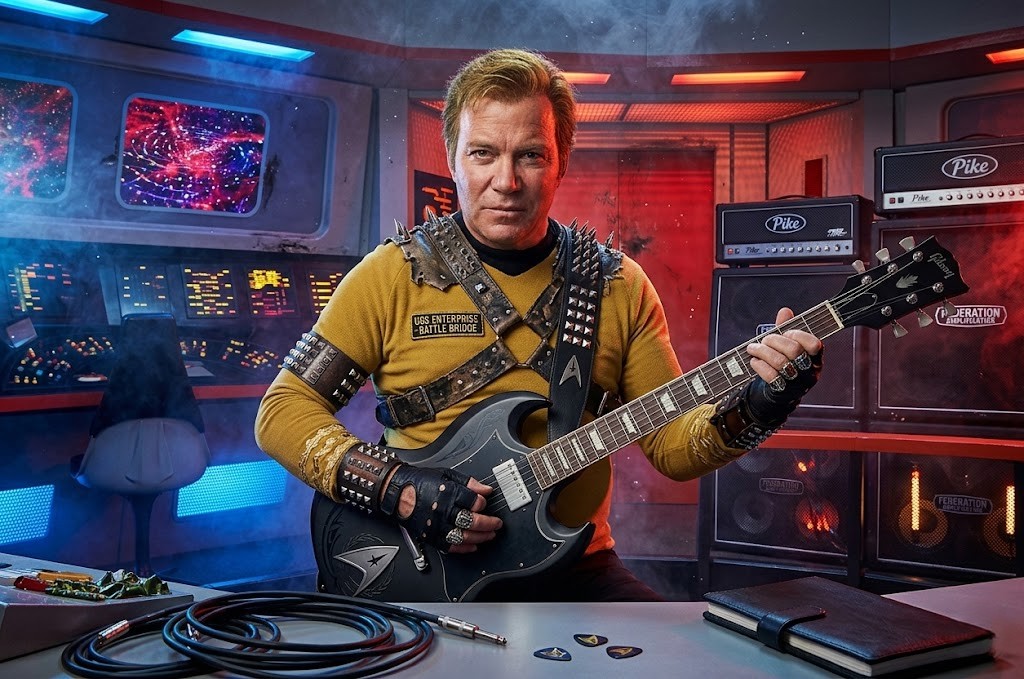
    William Shatner is releasing a heavy metal album.

    Yes, folks. The man who treated the Prime Directive as a mere suggestion rather than a hard rule is stepping into metal at 94 years…young? So, should we really be surprised? Most people at that age are just trying to find where they last left their glasses or keeping their thermostats at a sweltering 80 degrees and still freezing. Shatner decided the correct move in his retirement was to collaborate with some pretty big-name musicians (Zakk Wylde, Henry Rollins, Ritchie Blackmore, Chris Poland) and going full heavy metal.

    But Shatner isn’t the first legendary actor to wander into metal territory.

    Back in 2013, it was Christopher Lee. Count Dooku. Saruman. Dracula. The man had the voice of a cathedral organ and recorded multiple metal projects into his 90s, including the album Charlemagne: The Omens of Death. Lee went full symphonic metal, and the album not only charted on Billboard’s Hot Hard Rock chart but was taken seriously by the metal community.

    Since Shatner tends to live somewhere between performance art and parody, that begs the question: Will this be another novelty record, or will it land somewhere closer to Christopher Lee’s legitimate metal career? But, at 94, the sheer act of releasing a metal album is pretty impressive.

    For the Laggin Out crew, it was the perfect kind of bizarre pop-culture tangent: equal parts hilarious, weirdly admirable, and exactly the sort of headline that makes you pause and say, duh, of course this exists!

    Other Topics Covered This Live:

    • Microsoft Gaming Leadership Shakeup
    • Next-Gen Console Speculation
    • BAFTA Controversy
    • Gary Chalk Health Update
    YouTube player
  • Stream Notes: 02/22/2026 Women’s Hockey Is Done Waiting: Build It Like You Mean It

    Stream Notes: 02/22/2026
    Women’s Hockey Is Done Waiting:
    Build It Like You Mean It

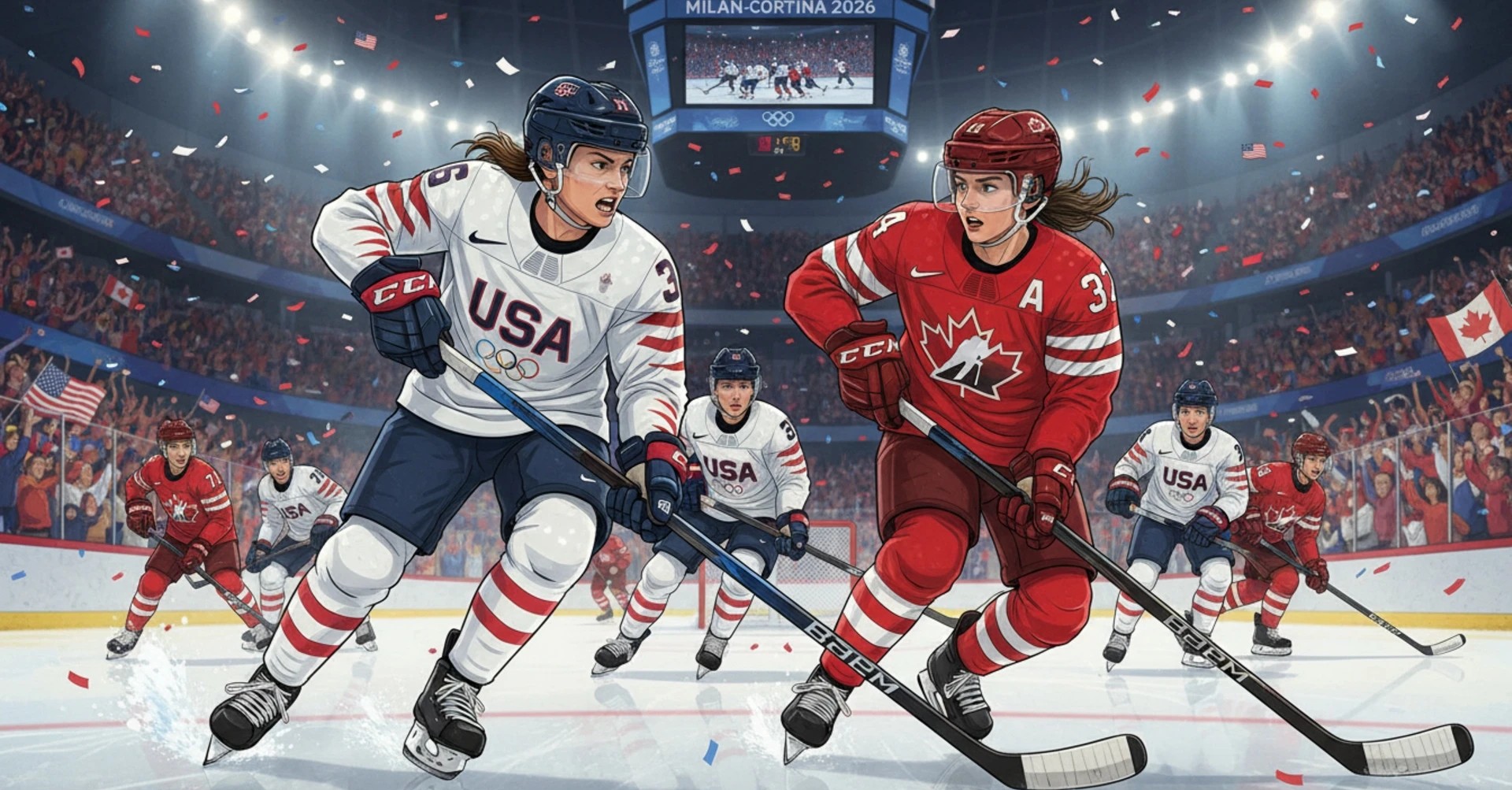
    Women’s hockey isn’t a novelty anymore. We witnessed history when they beat Canada in overtime, 2-1. The primary discussion centered on how women’s hockey proves it still belongs; their actions demonstrate they don’t need to ask for permission. People showed up. What stood out was the frustration with institutional hesitation. Networks want guaranteed reruns. Sponsors want “proven markets”. However, the irony is quite obvious: cannot get proof without exposure, and cannot get exposure without commitment. It’s almost like a self-imposed ceiling.

    Both Chieftain and Hiro made some pretty practical points. It’s not about forced parity or emotional appeals. Market validation, pure and simple. If the arenas are filling, merchandise moving, and viewership spikes in easily accessible games, then the conversation shifts from “Should we?” to “Why haven’t we already?”

    Sustainability matters, though. A professional league (no matter the sport) cannot just be run on vibes. Business levers are focused on revenue streams, broadcasting consistency, scheduling, and ownership stability. Women’s hockey has shown it doesn’t need charity, but rather execution.

    Looking in from the outside, it seems the fan base is ahead of the gatekeepers. But that’s usually how these things flow. Culture moves, institutions lag, and then finally money follows last.

    Other Topics Covered This Live:

    • Michael Jordan Buys Daytona Race Team (And Wins)
    • Rachel Zegler Is Somehow Still Relevant
    • Ronda Rousey v Gina Carano on Netflix
    YouTube player
  • Other News and Topics: 01/16/2026 Netflix-Warner Bros. Deal Signals the End of Old Hollywood

    Other News and Topics: 01/16/2026
    Netflix-Warner Bros. Deal Signals the End of Old Hollywood

    The tectonic plates of Hollywood have shifted again (no, not the San Andreas fault), and the tremors are felt from Los Gatos to the old Warner Bros. lot.

    In December 2025 Netflix and Warner Bros. Discovery (WBD) announced a deal where Netflix would acquire Warner Bros.’ film and television studios, HBO, and HBO Max in an agreement valued around $82.7 billion in enterprise value (that’s about $72 billion in equity and at $27.75 a share). The transaction is expected to close by mid- to late-2026 or beyond after WBD divests its linear TV and cable assets into a stand-alone company called Discovery Global.

    Not just a corporate marriage between Hollywood giants, its an aggressive rebalancing of power in an entertainment universe that, until recently, was convinced streaming was the grid while theaters were just backup generators.

    For decades Warner Bros. leaned heavily on a deep IP catalog (Harry Potter, Game of Thrones, DC Universe, Lord of the Rings) to anchor its identity. Netflix built its empire burning cash on global distribution, volume, and subscriber growth. Now that these two are set to fuse, Netflix gains unmatched studio firepower and an almost infinite content library, and Warner Bros.’ marquee franchises get consolidated under one digital platform.

    Competitive Chaos: Paramount Skydance’s Hostile Bid

    However, not everyone is taking this lightly. Paramount Skydance launched a hostile takeover bid valued around $108.4 billion, including all of WBD’s cable and TV networks, and has taken this fight to the courtroom and shareholders. Paramount’s all-cash offer and boardroom power play are designed to counter Netflix’s mixed cash-and-stock proposal and win over investors who are concerned about complexity and regulatory scrutiny.

    Warner Bros.’ board has repeatedly rejected Paramount’s advances, citing financial drawbacks and the strength of Netflix’s offer, which they believe better aligns with shareholder interests.

    Antitrust and Political Backlash

    Regulators and lawmakers on both sides of the aisle hovering. U.S. policymakers, foreign competition authorities, and industry voices have flagged the potential of the deal to concentrate too much creative and distribution power under one corporate roof, especially given that a merged Netflix-Warner Bros. entity would control a disproportionate share of global subscribers and premium streaming content.

    The DOJ, FTC, and international competition bureaus in Europe and Asia will almost certainly scrutinize the acquisition before approval. This process could stretch into late 2026 or even 2027.

    What the Deal Actually Includes (and What It Leaves Out)

    Under the proposed terms:

    • Netflix acquires Warner Bros. Pictures, HBO, HBO Max, DC Studios, and their full content library.
    • Television networks (CNN, Discovery channels) and legacy cable assets will be excluded and spun off into their own entity called Discovery Global prior to closing.
    • If regulators block the merger, Netflix will be on the hook for a $5.8 billion breakup fee. That’s no small bet on Hollywood’s future.

    Netflix execs insist they’ll continue releasing Warner Bros. films in theaters and maintain those “consumer-friendly windows” between theatrical and streaming premieres. But how long those windows last has already been a subject of industry debate. A theatrical window proposal of around 17 days has been leaked and is already drawing fire from cinema owners and traditionalists who are arguing that its too short to sustain theatrical revenue.

    Industry Implications: Why Hollywood Is Shaking

    The shockwaves coming from this deal are multi-layered.

    For filmmakers and creators, consolidation raises some concerns about reduction in bargaining power, fewer greenlight opportunities outside of the Netflix funnel, and more of centralized decision-making in which stories are portrayed.

    For theaters, even the promise to continue the theatrical windows doesn’t erase the broader trend: that streaming platforms are increasingly controlling premiere timing and viewer expectations, and the idea that a major film might exit theaters for at-home viewing after just a few weeks is now a very real possibility.

    Consumers may initially see a burst of access to familiar franchises on one platform, but whether that convenience comes at the cost of creative diversity and competitive marketplace tension still remains to be seen.

    Hollywood isn’t necessarily dying so much as it’s being repurposed. But, until audiences start valuing cultural moments over content consumption metrics, the walls will keep reverberating.

  • Other News and Topics: 10/31/2025 The Son of the Devil

    Other News and Topics: 10/31/2025
    The Son of the Devil

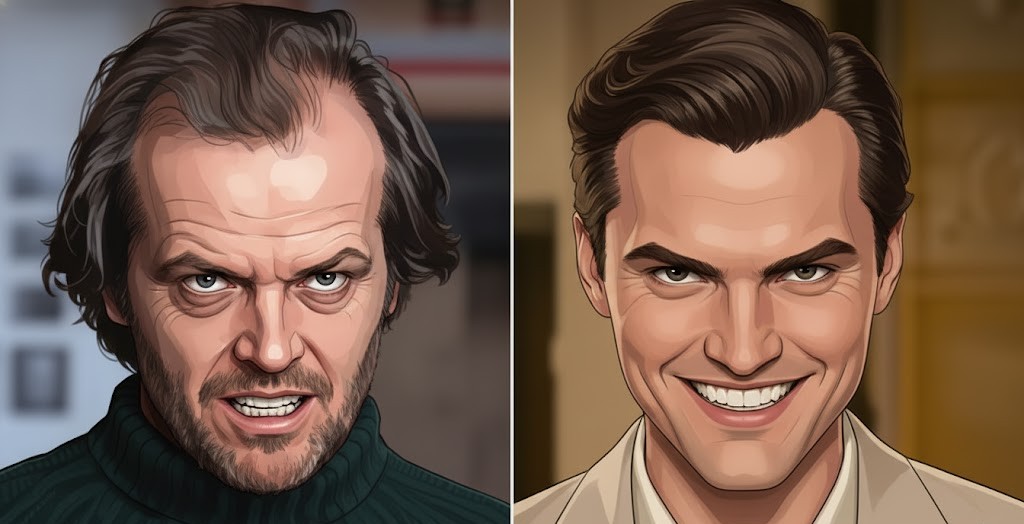
    We all recognize that face, that sinister, almost maniacal smile. For most of Hollywood, he defined a kind of American madness: charming, dangerous, and just self-aware enough to grin while the world burned around him. That’s not a legacy anyone inherits lightly. And yet his son seems to not only understand that undertaking, but takes it even further.

    He’s not just chasing his father’s legend. He’s walking through it.

    The Weight of a Grin

    Jack Nicholson’s face became cinematic shorthand for moral decay. He was just a smirk away from total apocalypse. From The Shining to One Flew Over the Cuckoo’s Nest to Batman, he was the man you couldn’t stop watching, even if it terrified you. He didn’t just play villians. He played the internal chaos of every man who thought he was good.

    His son, Ray, in contrast doesn’t replicate that energy. He distills it. You don’t even have to know his name in Smile 2 to recognize that grin. The moment it creeps up, you see exactly whose blood runs in his veins. His father’s madness was volcanic, but Ray’s is anesthetized and internalized. His horror doesn’t come from explosion, but from a slow erosion of sanity behind calm eyes.

    When Ray’s mouth curls, you may know where it came from, but it has evolved. Where Jack’s smile said “I’m losing it,” Ray’s says “I already have, and I like it here.”

    The Fragile Mask

    In the movie Borderline, Ray refines the act of unraveling. His performance moves like a man balancing both guilt and desire with a type of surgical precision. He teeters on the suggestion of danger without overplaying it. His restraint is what makes him magnetic.

    Our generation grew up with Jack’s horror thriving on spectacle. He was the screaming, smashing, physical performance type of madness. Ray hides it under his quietness. You can hear the scream in his silence.

    The Holy Trinity of Madness

    Jack Nicholson built a mythology in three acts:

    R.P. McMurphy in One Flew Over the Cuckoo’s Nest – rebellion as sanity

    Jack Torrance in The Shining – isolation as infection

    The Joker in Batman – chaos as an art form

    Each character had a different way of showing what it meant to lose one’s sanity on screen. Each character turned madness into a powerful performance. Ray doesn’t try to outperform his father. Instead, he walks through that legacy; exploring the quieter forms of societal collapse that the newer generations recognize. His madness isn’t mythic so much as it’s functional. It smiles through it’s therapy sessions and texts “I’m fine”.

    Inherited Horror

    We see every generation redefine fear. Jack gave us the monster within the man. Ray is giving us the man pretending not to be one. Where The Shining howled onscreen, Smile 2 only whispers. Where we watch the Joker dance through chaos, Ray’s characters live in it. The new madness isn’t about losing control, but maintaining it far too well.

    Ray is still new in the horror genre, but as he continues to cross into that territory, his real potential is only beginning to surface. When he’s finally given the lead in something truly deranged, it won’t feel like stunt casting. It will feel like cinematic destiny.

    The famous grin has returned to the screen, but it no longer belongs to a man slipping into madness in a hotel, or a maniacal clown in Gotham. It belongs to his son; quieter, colder, and much more intimate.

    If Jack was our apocalypse, Ray is the fallout.

    Madness may not be hereditary, but performance is, and when that Nicholson smile stretches across the screen, Hollywood’s longest-running nightmare continues; one perfect, terrifying grin at a time.

  • Other News and Topics: 10/03/2025 Streaming’s the Revolution, Hollywood’s the Rerun

    Other News and Topics: 10/03/2025
    Streaming’s the Revolution, Hollywood’s the Rerun

    There’s a ritual to it. You scroll through your usual sites, scan the titles, and just for a moment it feels like sitting in that dark theater just before the lights dim, quietly hoping something new will grab you. Maybe this will be the year a story knocks the wind out of you.

    But then the list starts to blur. Reboots. Prequels. Sequels. “Reimaginings.” All too familiar names in fresh makeup. That spark flickers, replaced by the kind of sigh you give when you knew better but hoped anyway.

    And yet, once in a blue moon (almost like clockwork) one of those familiar titles hits just right. For a couple of hours you’re pulled back into that seat, heart thumping like it used to. Those rare moments keep you coming back, scrolling again, chasing that cinematic high.

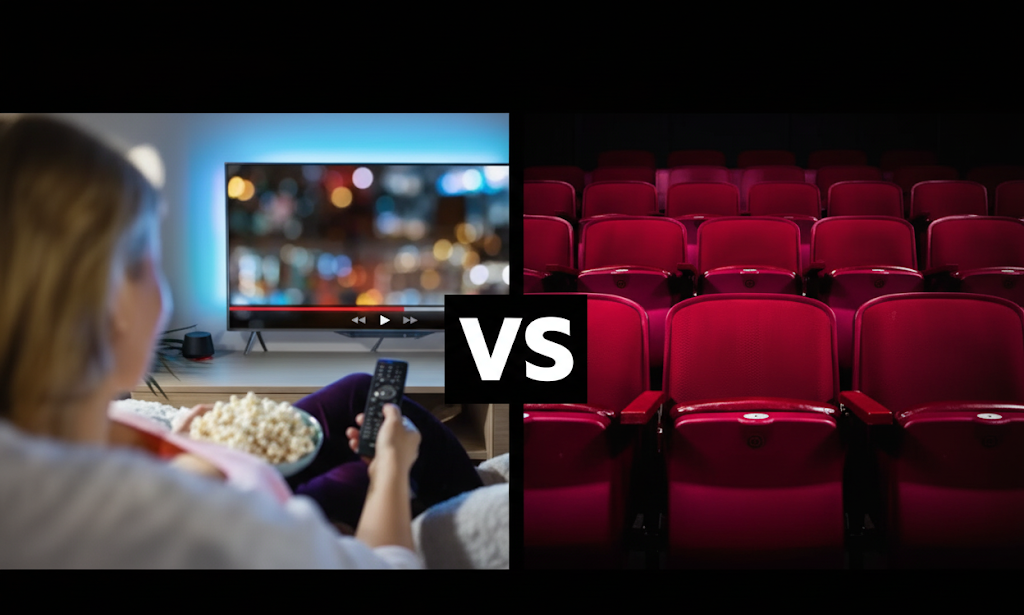
    Meanwhile, film keeps polishing the past, serving out just enough of the familiar to reel us back in, while streaming quietly builds the next era of entertainment.

    Movies: Stuck in a Time Loop

    Walking into a theater these days rarely feels like stepping into the new and unknown. More often, it feels like déjà vu. Another hero. Another villain with a redemptive arc. Another remake. Another “prequel to the prequel” explaining a side character’s backstory nobody remembered, and nobody asked for anyway.

    This isn’t cynicism, it’s strategy. Studios have gotten cautious. The cowboy days are over. In a digital world where nothing stays hidden, criticism is instant, and cancel culture looms, gambling hundreds of millions on something “original” sounds less like innovation and more like a financial panic attack. So, they keep polishing the familiar, wrapping it in pretty packaging to distract us. Nostalgia gets run through the machine again and again until it’s market-tested and franchise-ready.

    And sure, there are exceptions (there always are) but the heartbeat of original cinema has shifted. Discovery has been replaced by maintenance.

    Streaming: Where the Weird Thrives

    Streaming, on the other hand, has become a refuge for the strange and the bold. Series don’t have to conquer the box office in two weekends to survive. They can sprawl. They can unravel slowly or sprint ahead, experiment with structure, and dive into niches that would never make it past a studio boardroom.

    Take The Bear. A story about a struggling Chicago sandwich shop mirrored by the struggling family behind it. It’s raw, chaotic, and uncomfortably intimate. Sharp dialogue, overlapping voices, quiet emotional collapses in the walk-ins. My husband, a former chef, loves how accurately it nails the industry’s rhythm. It’s messy and human in ways that would be smoothed over by studio notes. Each episode is a sustained panic attack laced with grief and love, finding beauty in the breakdown. Streaming gave it the space to breathe, simmer, and build, something films rarely gamble on anymore.

    Then there’s The Last of Us. It could have been a run-of-the-mill zombie movie, but instead it leaned hard into grief, found family, and gray morality. The series stretched its story across a deliberate narrative that let moments land. Whole episodes focused on character bonds and human quiet between the chaos. It wasn’t chasing zombie spectacle so much as it was telling a story about survival and humanity in a broken world. Streaming gave it that room to let bouts of silence speak volumes, tension build slowly, and keep its soul intact instead of trimming it to fit runtimes.

    And then we get to The Boys. How do you describe it? It treats the superhero genre like a Catholic school girl who stumbled onto a Girls Gone Wild set, rips away the innocent façade, cranks up the chaos, and smiles like it’s been waiting for this fall from grace. It’s deliciously satirical, viciously gory, and unapologetically political. It takes aims at celebrity and blind hero worship and corporatization. And the best part of it all: no one is safe from its crosshairs. Streaming gave The Boys permission to be outrageous, uncomfortable, and raw. It pushed boundaries in tone and subject matter, proving you can take familiar material and do something entirely new when you’re not shackled to box-office formulas. Sure, it started as a comic book series, but the show cranks it to eleven, leaning harder, cutting deeper, and turning subtle jabs into cannonballs to the gut.

    The Great Role Reversal

    It’s funny, isn’t it? TV used to be the safe medium, formulaic sitcoms, predictable procedurals. Movies were the frontier. Now it’s flipped. TV is the playground. Film has become the brand shelf.

    Why It Matters

    Don’t bury film just yet. This isn’t a eulogy; it’s an acknowledgment of a shift already in motion. Movies are busy rewriting the past; streaming is writing the future. One is preserving. The other is exploring.

    And honestly? I still miss walking into a theater not knowing the ride I was in for. I miss the anticipation, the adrenaline rush, and then latent high; the kind that leaves your brain buzzing because you just saw something you didn’t even know you wanted. These days, that feeling doesn’t come from the big screen. It usually hits me halfway through a series I almost didn’t click “play” on.
  • Other News and Topics: 09/24/2025 After the Peak:  Why New Eras  Struggle to Match Old Legends

    Other News and Topics: 09/24/2025
    After the Peak: Why New Eras Struggle to Match Old Legends

    There’s a strange psychology that is hanging over anyone born between the late 1960’s, early 1970’s, and the early 1990’s. The bar for music, movies, and cultural touchstones has been set so absurdly high that attempting to match or even replicate it today feels almost impossible.

    Even if some of these were released before we were born, their shadows still loom over us today. The Beatles, Led Zeppelin, Queen. Films like The Godfather, Star Wars, Full Metal Jacket. The MTV Generation didn’t just consume culture. We curated a canon. And that canon became a benchmark.

    Generations of Expectation

    Gen X grew up in the heyday of both counterculture and commercialism colliding. It was the Wild West of expression. Rules were broken, boundaries redrawn, and every new sound or film felt like uncharted territory. MTV didn’t just play music videos. It detonated fashion, slang, and identity. Movies weren’t just for entertaining. They were generational lines in the sand. For Gen X, the frontier was wide open, and the map was being drawn in real time.

    For Xennials (that odd “OregonTraildiedofdystentery” micro-generation), those cultural moments weren’t just memories, they were inherited standards. This was the “Saga” generation, raised on sprawling stories that stretched across sequels, trilogies, and entire franchises. They didn’t just watch movies, they followed them religiously. Star Wars, Lord of the Rings, Harry Potter, The Matrix. These weren’t one-off entertainment tropes but ongoing mythologies that unfolded over years, teaching the Xennials to expect arcs, world-building, and cultural continuity as the norm.

    Millennials took it further. They grew up in the long shadow of their big brother and sister cultural giants, constantly reminded that “nothing today ever measures up”. They were ushered in with mixtapes and Saturday morning cartoons, then traded them in for Pokémon cards, iPods, and then eventually streaming queues. They straddled the last bits of analog childhood and they embraced the first of digital adulthood. They’re just old enough to remember patience, but young enough to pioneer instant gratification.

    Psychologically, a trap has been set. When our formative diets have been made up of works stamped as “the best ever”, our brains lock them in as the baseline. The dopamine hit of hearing Eddie Van Halen rip through his Eruption guitar solo or watching Darth Maul ignite his double-bladed lightsaber (I’m hearing John Williams’ Duel of the Fates in my head now as I’m writing this) doesn’t just fade away. It becomes the gold standard for everything else. New songs, new movies, new shows don’t stand on their own. They’re weighed against legends. And that kind of scale is almost impossible to balance.

    The Last Shared Stage

    There’s another piece to this: fragmentation. A Gen Xer can assume nearly everyone has seen E.T. or Top Gun. Xennials assume their friends know Seinfeld. Millennials could count on everyone knowing the words (or at least the chorus) to Backstreet’s Back. Today’s younger generations scroll different feeds, view different “viral” moments, and live in algorithmic silos. There is no longer one stage where everyone is watching the same band or movie at the same time. The collective experience has been fractured, and with it, the chance to build legends as we once did.

    Gen Xers, Xennials, and Millennials still carry that shared cultural dictionary, though. Whole conversations can unfold in movie lingo, a shorthand only people who grew up on the same blockbusters understand. My husband and I have an entire private language built on movie quotes alone, and more than once we’ve left people staring at us in sheer confusion. For us, a muttered “It’s like a reward” from Django Unchained, or “It’s MY ISLAND!” in Braveheart is its own inside joke. That shared dictionary runs so deep that even Klingon became a language option in schools. The lines between fiction and reality blurred, and quoting movies became as much a part of communication as everyday speech.

    Chasing That First High

    Nostalgia isn’t just longing for the past; it’s a psychological anchor. It colors how we experience the present. When Xennials hear new music, their brains don’t judge it within a vacuum. It’s weighed and measured against the rock riffs, hip-hop beats, and the crunch of metal that defined them. That constant comparison skews perception. New music feels “less than” even if it’s technically impressive. The same goes with film. The Marvel movies had the budget and spectacle. However, they still lacked that emotional hit like that way Aragorn rallies his men at the Black Gate in The Return of the King still can. Hear me out. Part of this is that loss of surprise. That loss of anticipation. Instant streaming means the film is waiting at home. Marketing campaigns reveal half of the plot before we even sit down. Trailers stretch into mini-movies, and online chatter spoils it for the rest. By the time we press play, we’re already in cinema sensory overload. The magic of discovery, that raw shock and awe of the unexpected, is now gone.

    The Impossible Benchmark

    Here’s the nuance of it all: it’s not that the newer generations cannot or have not produced brilliance. However, the bar has been set at “rewrite culture”. That’s not just a difficult task, it’s nearly impossible in a fractured, streaming-dominated, short attention span culture. The pressure is to match not just talent, but a once-in-a-century alignment of industry, technology, and shared audience. Unfortunately, that’s life’s cruel repeat of history. Our legends weren’t just artists; they were our constellations. They lit the sky once, and we’re still navigating by their glow.